A book for attorneys
People usually look for a lawyer in a hard moment, with no way to judge legal skill. A book lets them meet your judgment first, and gives the accountants, advisors and past clients who refer you something to pass along. It also has to live inside the rules on lawyer communications and client confidentiality. Here is both halves.
Why a book fits legal practice
Clients meet most lawyers once they already have a problem: a death in the family, a divorce, a dispute, a business sale. They are anxious, they cannot judge the quality of legal work, and they lean hard on who referred them and how the first conversation feels. That makes a law practice an unusually good fit for the three jobs a book does, described in how a book wins clients: trust before the first meeting, something referral partners can hand over, and a filter that brings the matters you want.
Legal topics also suit books. The questions clients ask in a first consultation (what happens next, what it costs, what mistakes to avoid, what the law actually says in plain words) are questions you can answer generally without advising anyone in particular. Teaching the general rule well is what makes a reader want your help with their specific facts.
What books have done in and around the law
Scribe's verified stories in this area come from someone who serves law firms and from authors who practiced law or found their career through a book. None is a law firm's client development book, so read them for method rather than as forecasts for a practice.
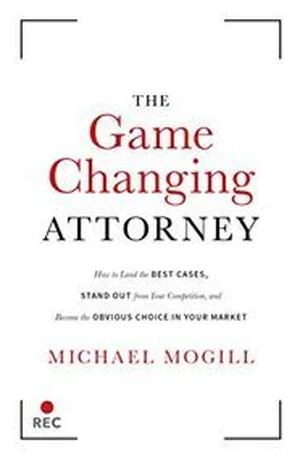
Michael Mogill runs Crisp, a company that helps smaller law firms market themselves. He wrote The Game Changing Attorney as the guide he wished he had when he started. One attorney read it on a flight, called the next day, and within 30 minutes became a six-figure client. Michael now will not have a sales conversation until a prospect has read the book, and estimates he earned at least $5 million in two years from people who read it. The book also became a podcast that, by his account, is the top podcast on legal marketing (story).
Two lessons transfer to a practice. First, the book did the persuading before any call, so the call was about fit. Second, Michael announced the book in front of thousands of people at his own summit to hold himself to finishing it.
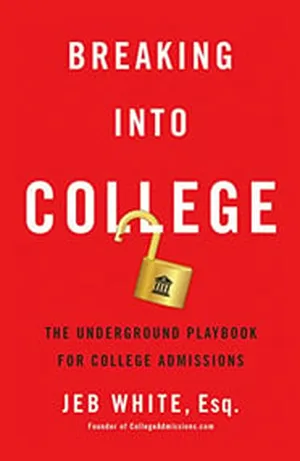
Jeb White was working full time as an appellate lawyer while helping students with college applications on the side. Nothing in his background signaled college admissions expertise, so he wrote Breaking Into College to give himself that credential. Within a year of publishing he left law to run his admissions business, gave away thousands of copies as the front door to an online course, and credits the book with six figures for his consulting business and thirty speaking invitations (story).
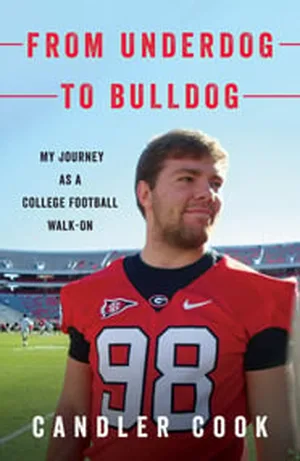
Candler Cook's future CEO read a few sentences about From Underdog to Bulldog in a fraternity alumni newsletter, asked for an introduction, and hired him into private debt. Later an attorney who knew Candler introduced him to a production company that optioned the book for a film (story). Professional networks pass books along in ways you cannot plan, if the book is in them.
These are strong results from individual Scribe authors, not typical ones, and nobody can promise them.
Rule 7.1: nothing false or misleading
ABA Model Rule 7.1 is short: "A lawyer shall not make a false or misleading communication about the lawyer or the lawyer's services." A communication is misleading if it misstates a material fact or law, or leaves out a fact needed to keep the whole from misleading. The comments make three points that matter for a book:
- Truthful can still be misleading. A statement misleads if it is likely to lead a reasonable person to a specific conclusion about you that has no reasonable factual foundation.
- Past results need context. Comment 3 says a truthful report of results for clients may mislead if it creates an unjustified expectation that others could get the same results without regard to the facts of their own case. Qualifying language may help.
- Comparisons need support. Unsubstantiated comparisons of your services or fees with other lawyers' can mislead if stated with false precision.
For a book, that means the parts about the law should be accurate and dated (laws change; say which year and jurisdiction you are describing), and the parts about you should be modest and checkable. "In twenty years I have seen these five mistakes most often" is fine. "My clients always win" is not.
Source: ABA Model Rule 7.1 and its comment, checked October 20, 2026.
Rules 7.2 and 7.3: referral sources and handing books out
Model Rule 7.2(a) lets a lawyer communicate about services through any media, which includes a book. The rest of 7.2 and Rule 7.3 matter most when you start using the book.
- Gifts to referral sources (7.2(b)). A lawyer may not give anything of value to a person for recommending the lawyer's services, except in listed cases. One exception is nominal gifts given as thanks that are neither intended nor reasonably expected to be compensation for recommendations. A signed copy as thanks sits differently from a standing supply of free books tied to referrals. Ask before you design a program.
- Specialist claims (7.2(c)). Do not state or imply you are a certified specialist unless you are certified by an approved or accredited organization, named in the communication. Watch the cover copy and the author bio.
- Name and contact (7.2(d)). Communications under the rule must include the name and contact information of at least one responsible lawyer or firm. An author bio with your firm details usually does this; check what your state requires.
- Solicitation (7.3). The Model Rule bars soliciting employment by live person-to-person contact with someone you know needs legal services in a particular matter, when a significant motive is pecuniary gain, with exceptions such as other lawyers, people you have a close or prior professional relationship with, and people who routinely use that type of service for business. Handing your book to an accountant is different from handing it to an accident victim in a hospital. Check how your state's version treats mailed or targeted contact.
Sources: ABA Model Rule 7.2; ABA Model Rule 7.3. Checked October 20, 2026.
Rule 1.6: client confidentiality on the page
This is where lawyers' books most often go wrong, because the best teaching material is a real matter. Model Rule 1.6(a) says a lawyer shall not reveal information relating to the representation of a client unless the client gives informed consent, the disclosure is impliedly authorized to carry out the representation, or a listed exception applies. Two comments set the practical boundary:
- Public does not mean free to use. Comment 3 says confidentiality applies not only to what the client said in confidence but to all information relating to the representation, whatever its source. A case that was in the newspaper is still a client's case.
- Hypotheticals have a test. Comment 4 permits discussing issues through a hypothetical so long as there is no reasonable likelihood the listener will be able to identify the client or the situation. In a book, the "listener" includes the client, their family, opposing counsel and anyone in a small town who remembers the case.
| Kind of story | Risk | Usual approach |
|---|---|---|
| Your own background and how you came to this work | Low | Use freely; this is often the most trusted part of the book |
| The general law and how a typical matter unfolds | Low, if accurate and dated | Name the jurisdiction and year; avoid advising the reader directly |
| A pattern you have seen across many matters | Low to moderate | Describe the pattern, not any one client |
| A clearly invented hypothetical | Moderate | Label it; change enough that no client or matter can be recognized |
| A real matter, disguised | High | Disguise often fails; prefer a hypothetical, or get informed consent in writing |
| A real matter, named, with consent | Consent-dependent | Written informed consent after the client reads the passage; keep the record |
Also mind Rule 1.6(c), which asks lawyers to make reasonable efforts to prevent unauthorized disclosure. If you work with a writing partner, do not hand over client files. Talk through patterns and invented examples instead, and agree in writing how drafts and recordings are kept. The time and confidentiality guide covers how to work this way.
Source: ABA Model Rule 1.6 and its comment, checked October 20, 2026.
Your state's rules come first
The ABA describes its Model Rules as models for the ethics rules of most jurisdictions. They are not binding on you by themselves. Your state adopted its own version, and it may differ from the model in ways that matter for a book, including in the advertising and solicitation sections. Before publication, read your state's versions of Rules 7.1 to 7.3 and 1.6, search your state bar's ethics opinions for "book" and "advertising," and if you practice in more than one state, check each. If your bar offers ethics guidance, ask it the specific question.
Source: ABA, About the Model Rules, checked October 20, 2026.
Worked example and checklist
Say you are a family law attorney whose clients come from therapists, financial advisors and former clients. You write a book for parents considering divorce: how custody decisions are made in your state, what the process costs and how long it takes, the ten mistakes that make it harder on children, and how to choose a lawyer. Every story is either about you, a described pattern, or a labelled invention built from no single matter. The author bio names your firm and contact details. You give therapists and advisors one signed copy each, and a stack for their waiting rooms only after checking your state's version of Rule 7.2. The book's first chapter is the one you would most want a frightened parent to read before calling you.
Pick the matters you want more of
The book attracts the clients it speaks to. Write for them.
Outline from first-consultation questions
Use the topic guide to turn them into chapters.
Mark every story by type
Use the table above. Anything in the bottom two rows needs written consent or a rewrite.
Check your state's rules and opinions
Especially for the cover copy, bio, any results, and how you will distribute the book.
Plan the distribution
Use the practice worksheet to map referral partners, consultations and talks.
Nothing on this page is legal advice or an ethics opinion. It points to the ABA Model Rules as a starting place; your state's rules and its ethics authorities decide what applies to you.