A book for financial advisors
People choose an advisor on trust long before they can judge a plan. A book lets them spend hours with your philosophy first. Here is how seven advisors used theirs, and what your compliance team will look at before yours goes out.
Why a book suits advisory work
A new client is handing you their savings, their retirement and often their family's future. They cannot test your judgment before they hire you, and the industry's marketing all sounds alike. Mark Aho, an advisor in the CEG mastermind community, says it plainly in his story: clients want to know who you are and what you believe, and "all the charts and graphs on earth" will not help if you cannot show them.
A book shows your philosophy in full, in your own voice, at the reader's pace. It also suits the way advisory practices grow: through referrals from clients, accountants, attorneys and employers, all of whom need something to hand over. And it lasts. A retirement book written around principles rather than this year's numbers can work for many years with light revisions.
How seven advisors used their books
Each of these advisors used the book differently. Read them as a menu of methods, not as forecasts.
The first-meeting handout
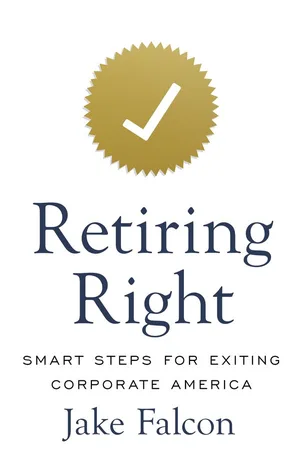
Jake Falcon, founder of Falcon Wealth Advisors in Kansas City, could never find a retirement book he trusted enough to hand clients, so he wrote Retiring Right. He now gives a copy to every person at a first meeting and calls it a deeper website. The book also brings in prospects on its own: one on the East Coast found his audiobook on Spotify and arrived already knowing his philosophy (story).
The handout at church, conferences and talks
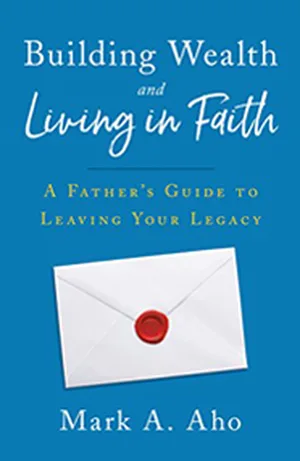
Mark Aho buys copies of Building Wealth and Living in Faith 100 at a time and hands them out wherever he meets people who could use it. He also found an internal benefit he had not planned: the book united his firm around one philosophy and gave everyone a common language.
The talk that feeds referrals
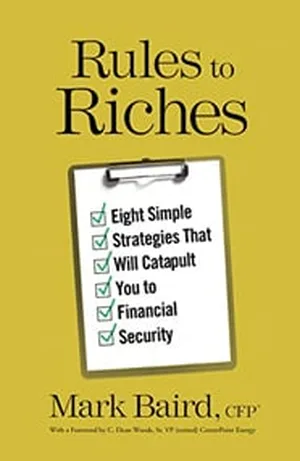
Mark Baird, a Certified Financial Planner in a rural Indiana town, did no speaking before Rules to Riches. Afterward he averaged about one talk a month, all by word of mouth, and describes the result as a referral chain. His assets under management doubled since the book (story).
The book that reaches the plan sponsor's CEO
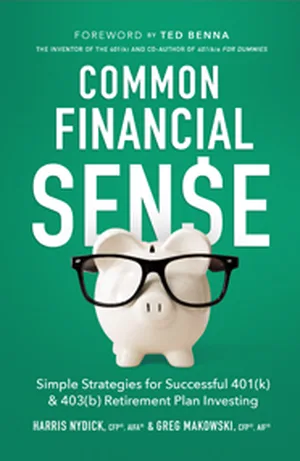
Harris Nydick's firm works with 401(k) and 403(b) plan sponsors. Executives at corporate clients get Common Financial Sense first, then the firm runs financial education sessions for employees. Prospects sometimes arrive at discovery calls having already read it, and the firm reports that new plan acquisitions accelerated after publication (story). Before publishing, Harris had four college students mark every word they did not understand with orange Sharpies, then rewrote.
Clients from far outside the region
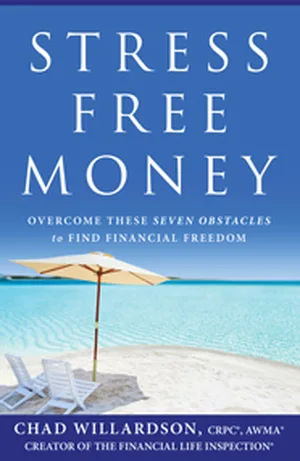
Chad Willardson's firm in Southern California gained clients in Virginia, Florida, New Jersey, Guatemala and Switzerland within six months of Stress-Free Money, and made back more than three times its investment in the book in ten months (story).
Current clients and the local community
Sam Marrella's Your Retirement Game Plan brought new clients who contacted him after reading it, several of whom retained him, and current clients told him it felt like a conversation with him (story).
The filter
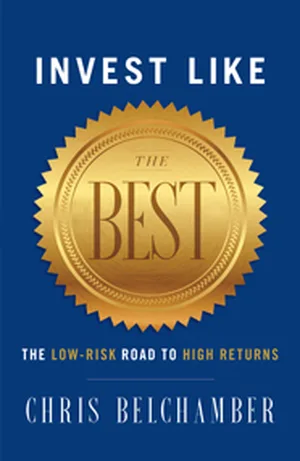
Chris Belchamber's low-risk approach runs against the industry default. Invest Like the Best lets prospects read the argument first, so the ones who call already understand it (story).

These are strong results from individual Scribe authors, not typical ones, and nobody can promise them. Firm assets and client counts depend on many things besides a book.
Choosing the advisor book's topic
The advisor books above share a pattern: each answers the questions a specific kind of client brings to a first meeting. Retiring from corporate America. Investing a 401(k) sensibly. Money and faith. Personal finance for people who were never taught it. Jake Falcon's test is a good one: would you hand this book to a client approaching the decision it covers, without caveats? The topic guide shows how to turn your meeting notes into a table of contents.
Write for compliance from the first outline. Teach principles, decisions and the questions to ask. Leave out specific products, performance figures and promises about outcomes. A book built that way is easier to approve and stays accurate longer.
If you are with a FINRA member firm: Rule 2210
FINRA Rule 2210 governs communications with the public by member broker-dealers and their associated persons. What follows is what to raise with your firm, not a ruling on your book.
- Which category the book falls into. The rule defines a retail communication as a written (including electronic) communication made available to more than 25 retail investors within any 30 calendar-day period. A book you hand out widely, and excerpts you post or email, will likely be judged against that definition. Ask how your firm classifies the book, the audiobook, excerpts, and the slides for any talk based on it.
- Principal approval. A registered principal must approve each retail communication before the earlier of its first use or its filing with FINRA. Build approval time into the publishing schedule.
- Filing. Some retail communications must be filed with FINRA's Advertising Regulation Department, for example by new member firms during their first year, and communications about certain products. Your firm will know whether any part of the book triggers filing.
- Content standards. Communications must be fair and balanced and may not contain any "false, exaggerated, unwarranted, promissory or misleading statement or claim." They generally may not predict or project performance or imply that past performance will recur, with narrow exceptions.
- Testimonials. If a client's words about your advice or performance appear, the rule requires prominent disclosures, including that the testimonial may not represent other customers' experience and is no guarantee of future performance.
- Talks. Seminars and interviews are public appearances under the rule, and scripts, slides and handouts used in them are treated as communications.
- Records. Approved communications must be retained under the firm's recordkeeping obligations.
Authorship. FINRA Regulatory Notice 08-27 (May 2008, written under the older NASD rule numbers) says registered representatives may not suggest, or encourage others to suggest, that they authored investment-related books they did not write, and that a publication prepared by a third party must disclose that it was prepared by the third party or for the representative's use. If you write with professional help, ask compliance how the firm applies this to your book and what, if anything, it wants stated.
Sources: FINRA Rule 2210, Communications with the Public; FINRA Regulatory Notice 08-27. Both checked October 20, 2026.
If you are a registered investment adviser: the SEC Marketing Rule
Rule 206(4)-1 under the Investment Advisers Act, adopted by the SEC in December 2020 (Release IA-5653, effective May 4, 2021), governs adviser advertisements. Points to raise with your chief compliance officer:
- Whether the book is an advertisement. The rule covers any direct or indirect communication an adviser makes to more than one person that offers advisory services to prospective clients or private fund investors. It excludes extemporaneous, live, oral communications and information in required regulatory filings. Your CCO will decide how the book, its excerpts and the way you distribute it fit that definition.
- The seven general prohibitions. An advertisement may not include untrue statements of material fact; material claims you cannot substantiate on the SEC's request; misleading implications; benefits without fair and balanced treatment of material risks and limitations; references to specific investment advice that are not fair and balanced; performance results or time periods chosen unfairly; or anything otherwise materially misleading.
- Testimonials and endorsements. Client praise brings required disclosures (that it comes from a client, whether compensation was paid, and material conflicts), plus oversight and, for paid promoters above a small amount, a written agreement. Back-cover blurbs from clients deserve a direct question.
- Third-party ratings. Any rating or ranking needs disclosures about the date, the period covered, who produced it and any compensation.
- Performance. If gross performance appears, net performance must appear too, and portfolio results generally need one-, five- and ten-year periods. Hypothetical performance requires policies and extra disclosure. Most practice books simply leave performance out.
Sources: SEC final rule, Investment Adviser Marketing; rule text at 17 CFR 275.206(4)-1. Checked October 20, 2026. If you are registered on both sides, ask how your firm applies each set of rules to the book.
What compliance will look at, item by item
| In the book | Why it gets attention | How to prepare |
|---|---|---|
| Performance figures, returns, "beat the market" language | Projection limits (FINRA); presentation rules (SEC) | Teach principles; leave specific performance out |
| Client stories | Fair and balanced standard; may be testimonials; privacy | De-identify or use labelled hypotheticals; get written consent for any identifiable story |
| Client praise in blurbs or the foreword | Testimonial disclosure requirements | Ask before you request blurbs; colleagues and experts are simpler |
| Promises about outcomes ("retire two years sooner") | Promissory claims are prohibited | Describe decisions and trade-offs, not guaranteed results |
| Named products or securities | Recommendations and balance | Explain categories and how to evaluate them |
| Author credit and acknowledgments | Regulatory Notice 08-27 on authorship | Ask how the firm wants professional writing help acknowledged |
| Excerpts, social posts, slides, the audiobook | Each may be a separate communication | Submit the reuse plan with the manuscript |
Tell compliance at the idea stage
Share the topic, the reader and how you plan to use the book. Ask what they need to see and when.
Submit the outline
A chapter list with the stories you plan to tell catches problems before they cost a rewrite.
Submit the full manuscript with the reuse plan
Include the cover copy, author bio and any excerpts, slides or emails you intend to use.
Keep the approval record
Note what was approved and when, and resubmit when you revise an edition or a statistic.
Then use the practice worksheet to map where the book will do its work: first meetings, plan sponsors, talks, referral partners. It runs in your browser and sends nothing unless you choose to.
Nothing on this page is legal, compliance or financial advice. Rules change and firms apply them differently; your compliance department decides what you may publish.