Email marketing for lawyers, built on your book
Most people who will one day need a lawyer do not need one today. A short, useful email each month keeps you in mind until they do, and in front of the people who refer you. The hard part is having something worth saying every month. A book solves that. Here is who goes on the list, what to send, how often, a 12-issue starter plan, how the book grows the list, and the rules to check first.
Why a book makes the newsletter easier
Law firm newsletters usually stall for one of two reasons: nobody has time to write them, or they fill up with firm news nobody outside the firm wants. A book fixes both. It is a finished, reviewed body of your thinking, organized by topic, and every chapter holds several ideas that each make one short email.
Clients cannot judge legal skill, so they judge your judgment (the attorney guide explains why). A newsletter drawn from the book is a monthly sample of it, in the same voice as the book.
Who goes on the list
A small list of people who know you beats a large list of strangers.
| Group | Why they belong | What they want from you |
|---|---|---|
| Past clients | They trust you, face new questions over time, and refer family and friends | Reminders of when to come back, and things worth forwarding |
| Referral sources | Accountants, advisors, therapists, other lawyers who send you matters | Something useful to pass to their clients |
| People who got the book | They have already spent time with your thinking | The next idea, the next question answered |
| Talk and seminar attendees who signed up | They chose to hear more after hearing you speak | A follow-up on the talk, then regular issues |
Leave off anyone who did not give you their address or would be surprised to hear from you, such as names from a court docket or a purchased list. Tag each group so referral partners can get a note of their own.
Treat the list itself as confidential. Rule 1.6 protects all information relating to a representation, and the fact that someone hired you can fall within it (see confidentiality in the attorney guide). Use an email service that hides recipients from one another, and check how it stores the data.
What to send
One idea per issue, short enough to read on a phone, useful even to someone who never calls.
- An idea from a chapter. One point from the book in a few hundred words, with a labelled hypothetical and a link to the chapter. This is most issues.
- A change in the law, framed generally. When a statute, rule or decision changes something your readers face, explain what changed and who it affects in general terms, with the jurisdiction and date. Do not tell a reader what to do in their own matter.
- A reader question. Answer a question many clients ask, rewritten so it is not traceable to whoever asked it.
End each issue with one next step: reply, read the chapter, or book a consultation. Keep firm news to one line at the bottom. Readers will sometimes reply with the facts of their own matter, so decide who reads replies, and say in the footer that a reply does not make someone a client.
How often
Pick a schedule you can keep for a year. For most solo and small-firm lawyers that is monthly. Twice a month suits practices with a lot of legal change to report, such as tax or employment law. Quarterly is too thin to build a habit, and weekly is hard to keep up beside client work. Twelve chapters are a year of issues. Write two or three ahead so a busy month does not break the run.
A 12-issue starter plan
A first year for a hypothetical estate planning attorney whose book is about planning for a family. Swap in your own chapters.
| Issue | Drawn from | The one idea | Next step offered |
|---|---|---|---|
| 1 | Introduction | Why you wrote the book and who it is for | The free first chapter |
| 2 | Chapter 1 | What happens when someone dies with no plan in your state | Read chapter 1 |
| 3 | Chapter 2 | Will or trust: the questions that decide it | Reply with your question |
| 4 | Chapter 3 | Choosing a guardian for children | Forward to a parent you know |
| 5 | Law update | A recent change in your state's rules, framed generally | Book a review |
| 6 | Chapter 4 | Beneficiary forms that override a will | A one-page checklist |
| 7 | Reader question | "What happens to my digital accounts?" | Reply with your question |
| 8 | Chapter 5 | Planning for a family business | The full book, free |
| 9 | Chapter 6 | Powers of attorney and health care directives | Read chapter 6 |
| 10 | Chapter 7 | The five mistakes you see most often, as patterns | Book a consultation |
| 11 | Law update | Year-end changes readers should know about | Book a review |
| 12 | Conclusion | When to update a plan: births, moves, marriages, sales | Book a review |
To turn first-consultation questions into chapters in the first place, see choosing a topic for your practice. The newsletter is one piece of a wider plan: the law firm content marketing plan turns each chapter into a practice-area page, articles, a talk and a client guide on the same monthly rhythm.
How the book grows the list
Every copy is a chance to invite someone onto the list.
Inside the book
Point readers to a page on your website with the checklists the book mentions, and a sign-up. It is how a retail buyer becomes someone you can reach.
On your website
Offer one chapter free in exchange for an email address, and the full book to people who book a consultation. The lead magnet examples cover how to set this up.
At talks
End with a sign-up for the chapter or the book, and say plainly that people will get the monthly email.
Through referral partners
Give each partner a signed copy and ask whether they would like the newsletter. Issues they forward reach people you could not.
At intake and closing
Ask on the intake form whether new clients want the newsletter, and record the yes.
What authors have done with a list
One author here serves law firms; two work outside law. None runs a law firm newsletter, so read them for method.
Michael Mogill runs Crisp, which helps smaller law firms market themselves, and wrote The Game Changing Attorney as the guide he wished he had when he started. He will not have a sales conversation until a prospect has read the book, and estimates he earned at least $5 million in two years from people who read it (story). For a newsletter, the lesson is that the book does the persuading, so every issue can point back to it.
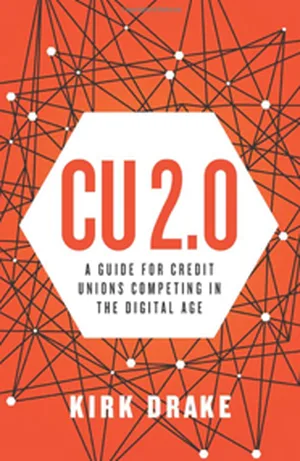
Kirk Drake wrote CU 2.0 for credit union boards and management teams. Since the book came out he has built a 13,000-person email list and a 1,500-person Facebook group, both full of credit union executives he mentors (story). The point for a lawyer: a list of the exact people you serve beats a large general one.
Ron Thurston, who led retail teams for more than thirty years, built an email list of several thousand people early on and still uses it every week. Before his second book, Human Pride, he teased it about six months out and emailed his subscribers every two or three weeks (story). The list was part of how he built the launch around readers.

These are strong results from individual Scribe authors, not typical ones, and nobody can promise them.
The rules to check
Two sets of rules apply: your state's rules for lawyers, and federal law on commercial email.
Lawyer communication rules
ABA Model Rule 7.1 bars false or misleading communications about you or your services, including past results reported without context. Rule 7.3 covers solicitation, and Rule 7.2 covers gifts to referral sources. The Rule 7.1 section and the Rules 7.2 and 7.3 section of the attorney guide set these out with links to the ABA text. In a newsletter: no promises, results only with context, no specialist claim unless certified, and your name and contact details in every issue.
Client confidentiality
Rule 1.6 applies to every issue the same way it applies to the book: no information relating to a representation without informed consent, even if the case was public, and hypotheticals only when no reader could identify the client or the matter. The confidentiality section has a table of story types and their risk.
State labeling and filing rules vary
States differ on exactly the points a newsletter touches. Two examples:
- Filing. The Florida Bar says informational newsletters that contain the lawyer's or firm's name must be filed for review, that direct mail and direct email advertisements must be filed at least 20 days before use, and that mailings sent only to other lawyers, current clients and former clients are exempt. If the promotional content does not change, only the first issue needs filing.
- What counts as solicitation. The ABA Model Rule limits solicitation by live person-to-person contact. Pennsylvania's comment to its Rule 7.3 says such contact includes text messages, while chat rooms and other written communications that recipients may easily disregard are not included.
Ask your state bar whether advertising emails need a label, and what it must say. Read your own state's Rules 7.1 to 7.3 and its ethics opinions for "newsletter" and "email," and check every state where you are licensed.
Sources: The Florida Bar, advertising filing requirements; 204 Pa. Code r. 7.3 and comment. Checked October 21, 2026.
CAN-SPAM
The CAN-SPAM Act covers "commercial electronic mail messages," defined in 15 U.S.C. 7702 as email whose primary purpose is the commercial advertisement or promotion of a product or service. Messages whose primary purpose is a transaction or an existing relationship, such as confirming a transaction or delivering a service already agreed, are excluded. A newsletter mixing education and promotion is commercial under 16 CFR 316.3 if its subject line suggests it promotes a service, or if a reader of the body would conclude promotion is its main purpose. The simple course is to follow the rules for every issue. Under 15 U.S.C. 7704(a), each commercial message must:
- Carry header information that is not materially false or misleading, and a subject line that does not mislead about the contents.
- Include a working return email address or other online way to opt out, which must keep working for at least 30 days after the message is sent.
- Honor an opt-out within 10 business days, and not sell or transfer that address.
- Include clear notice of the chance to opt out and a valid physical postal address for the sender.
- Identify itself as an advertisement or solicitation, unless the recipient gave prior affirmative consent. Consent removes only this requirement; the opt-out and postal address still apply.
Sources: 15 U.S.C. 7704; 15 U.S.C. 7702; 16 CFR 316.3, all on the Legal Information Institute, checked October 21, 2026.
Checklist before the first send
Build the list from people who know you
Past clients who said yes, referral partners, readers, talk attendees.
Set up the email service
Hidden recipients, a working unsubscribe link, postal address and responsible lawyer in the footer.
Map twelve issues to the book
Use the grid above. Write three before sending one.
Read each issue against Rules 7.1 and 1.6
No promises, no identifiable client facts, law updates dated and general.
Check your state
Labeling, filing and ethics opinions, in every state where you are licensed.
Plan the sign-ups
Use the practice worksheet to list the partners, talks and meetings where the book can invite people onto the list.
Nothing on this page is legal advice or an ethics opinion. Your state's rules and its ethics authorities decide what applies to you.