Marketing for lawyers, within the rules
Most people hire a lawyer in a hard moment, through someone they trust. Good law firm marketing works with that: it makes you easy to recommend and easy to trust before the first call, and it stays inside the ethics rules on communications and confidentiality. Here are 18 ideas built that way, for solo attorneys and small firms.
The rules that shape lawyer marketing
The ABA describes its Model Rules as models for the ethics rules of most jurisdictions. You are bound by your own state's version, which may differ, but the model rules show what to check.
- Rule 7.1, nothing false or misleading. "A lawyer shall not make a false or misleading communication about the lawyer or the lawyer's services." Its comment adds that a truthful report of past results can still mislead if it creates an unjustified expectation that others could get the same results without regard to the facts of their own case.
- Rule 7.2, advertising and referral sources. A lawyer may communicate about services through any media. A lawyer may not give anything of value to a person for recommending the lawyer's services, except in listed cases such as nominal gifts given as thanks that are neither intended nor reasonably expected to be compensation. Do not state or imply you are a certified specialist unless you are certified by an approved or accredited organization, named in the communication.
- Rule 7.3, solicitation. It bars soliciting employment by live person-to-person contact with someone you know needs legal services in a particular matter, when a significant motive is pecuniary gain, with exceptions such as other lawyers and people you have a close or prior professional relationship with.
- Rule 1.6, confidentiality. It protects all information relating to the representation of a client, whatever its source, unless the client gives informed consent or an exception applies. Hypotheticals are permitted only when there is no reasonable likelihood the listener could identify the client or the situation.
In practice: teach the general law, describe yourself modestly and checkably, keep client matters out unless you have written consent, and check your state's rules before any referral gift program or targeted outreach. The guide for attorneys covers each rule in more depth.
Sources: ABA Model Rule 7.1; Rule 7.2; Rule 7.3; Rule 1.6; About the Model Rules. Checked October 20, 2026. Nothing on this page is legal advice or an ethics opinion.
Focus
1. Name the matters you want more of
"Estate plans for business owners" or "custody cases for parents who share a business" is easier to refer than "general practice." Everything that follows should speak to that client.
2. Write down the first-consultation questions
What happens next, what it costs, how long it takes, which mistakes make it worse. These questions become your web pages, talks, newsletter and, later, your book chapters. The topic guide turns them into an outline.
3. Make your website answer them
One page per question, in plain words, with the jurisdiction and year named because the law changes. Your firm name and contact details belong on every page.
Referrals
4. List who meets your clients first
Accountants, financial advisors, therapists, bankers, real estate agents and lawyers in other practice areas. For each, write down which of their clients they could send you.
5. Tell each one exactly who to send
"Business owners who have not updated their estate plan since selling a company" gives them a person to think of. "Anyone who needs a lawyer" does not.
6. Refer out, generously
Keep a list of lawyers in other practice areas and send them the matters you do not handle. Referral runs both ways.
7. Thank people within the rules
A note, or a nominal gift given as thanks, is different from paying for referrals. Under Model Rule 7.2(b), do not build anything that looks like compensation for recommendations; check your state's version first.
8. Stay in touch with past clients
Past clients are often the best source of the next one. An occasional useful note, with nothing about their own matter, keeps you the lawyer they mention.
Teaching in public
9. Talks for the professionals who refer you
A continuing-education session for accountants or advisors on the legal issue their clients run into most. They leave knowing the law better and knowing who to call.
10. Community talks for the client
Libraries, business groups and associations host talks on wills, small business contracts, or what to know before a divorce. Teach the general rule; never advise anyone in the room on their facts.
11. Articles where your clients read
Local business journals, trade publications and association newsletters. Answer one first-consultation question per article.
12. Turn each question into several pieces
A practice-area page, an article, a talk and a one-page client guide can all come from the same answer. The law firm content marketing plan lays out the schedule.
13. Be a podcast guest on one problem
Hosts want guests who can explain one thing clearly. Pitch the question your clients most often get wrong, not your firm.
Staying in touch
14. A short monthly email
One useful explanation a month to past clients and referral partners who agreed to receive it. Email marketing for lawyers covers the CAN-SPAM basics and what to write.
15. A guide worth asking for
A checklist or short guide that answers one big question ("what to gather before you meet an estate planning attorney") gives visitors a reason to stay in touch. See the lead magnet examples.
A book as the anchor
16. Write the consultation down in full
A book answers the questions from idea 2 for the client from idea 1, so a reader meets your judgment before the first call. Every story should be about you, a described pattern, or a labelled hypothetical; a real matter needs written informed consent under Rule 1.6.
17. Let it do the persuading
Michael Mogill runs Crisp, a company that helps smaller law firms market themselves. He wrote The Game Changing Attorney for the lawyers he serves. One attorney read it on a flight, called the next day, and within 30 minutes became a six-figure client. Michael now will not have a sales conversation until a prospect has read the book (story). He sells to law firms rather than practicing law, so read it for method; it is his result, not a typical one.
18. Hand it to the people who refer you
A signed copy for each partner from idea 4 explains how you think when you are not in the room. Check your state's version of Rule 7.2 before you give books in quantity. Plan these uses with the practice worksheet.
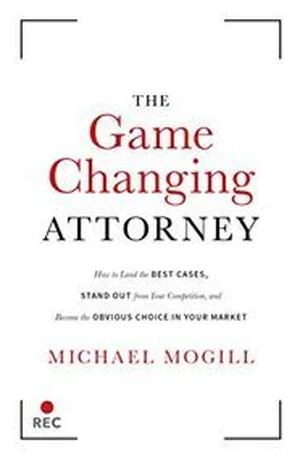
For the full picture of how a book fits a law practice, including confidentiality and your state's rules, read the guide for attorneys and how a book wins clients.
Author results from Scribe Media success stories, linked on each one. They are individual results, not typical ones.